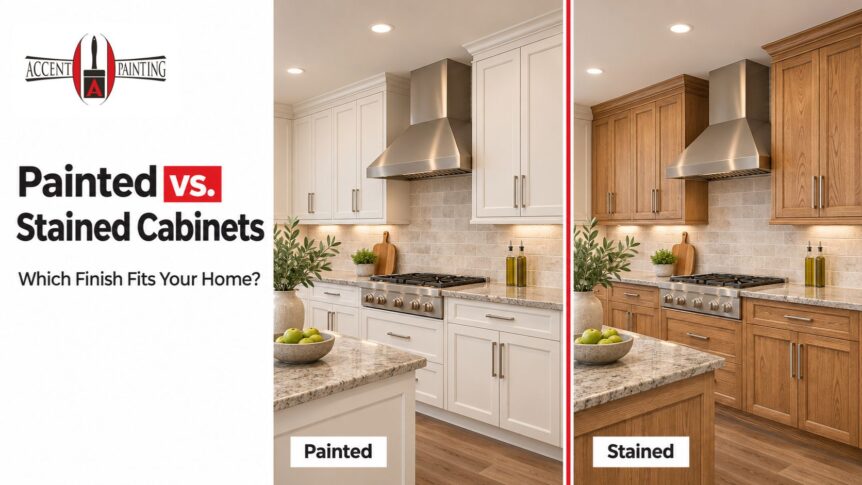
When comparing painted vs stained kitchen cabinets, the better choice depends on the look you want, the material your cabinets are made from, and how much maintenance you’re comfortable with. Painted cabinets offer greater color flexibility and can create a clean, updated appearance. Stained cabinets highlight the natural character of wood and often make small scratches or wear less noticeable.
Neither finish is automatically more durable or less expensive. The quality of the coating, existing cabinet condition, and preparation process all influence the final result.
For homeowners in Las Vegas and Henderson considering a kitchen update, understanding these differences can help avoid an expensive refinishing mistake.
What’s the Difference Between Painted and Stained Kitchen Cabinets?
The main difference is how each finish changes the appearance of the cabinet surface.
Paint creates an opaque coating over the material. Depending on the finish, it can hide much of the wood’s natural color and provide a consistent appearance across doors, drawers, and cabinet frames.
Stain colors the wood while allowing its grain and natural characteristics to remain visible. Most stained kitchen cabinets also have a clear protective finish that helps resist everyday moisture, grease, and wear.
A stained oak cabinet, for example, will retain the distinctive grain patterns associated with oak. The same cabinet painted white may look brighter and more uniform, although some grain texture can still show unless it is filled during preparation.
The right choice often comes down to whether you want your cabinets to look like natural wood or become a solid-color design feature.
Painted vs. Stained Kitchen Cabinets: Side-by-Side Comparison
Feature | Painted cabinets | Stained cabinets |
Appearance | Solid, consistent color | Visible natural wood grain |
Color options | Broad selection of colors | Wood-inspired tones and selected custom colors |
Best surface | Properly prepared wood, MDF, and other compatible materials | Natural wood or suitable wood veneer |
Scratches and chips | Can expose a contrasting material underneath | Minor wear may blend more naturally with the grain |
Cleaning | Generally easy with a compatible protective finish | Generally easy with a sound clear topcoat |
Maintenance | May need careful color-matched touch-ups | May be easier to blend minor marks on some wood finishes |
Cost | Depends on preparation and coating system | Depends on wood, stripping, stain color, and clear coating |
Ideal style | Contemporary, transitional, or traditional | Natural, rustic, contemporary, or traditional |
The comparison assumes professionally applied finishes on suitable cabinet materials. Low-quality paint or poorly applied stain can perform badly regardless of the appearance you choose.
Advantages of Painted Kitchen Cabinets
More Freedom With Kitchen Colors
One of the biggest advantages of painting cabinets is the ability to choose a specific color.
White, warm cream, muted green, navy, charcoal, and other shades can change the character of a kitchen without replacing its entire layout.
Paint also makes it easier to coordinate cabinetry with countertops, backsplashes, flooring, and existing wall colors.
In kitchens with several cabinet materials or inconsistent wood tones, a carefully selected painted finish can create a more unified appearance.
A Practical Way to Update Older Cabinets
Cabinet painting can be a useful option when the existing cabinet boxes and doors are structurally sound, but the finish looks dated.
For example, a kitchen with dark stained cabinets may feel visually heavy, especially when the surrounding countertops and flooring are also dark.
Changing the cabinets to a lighter painted finish can create a noticeably different appearance while preserving the original layout.
Unlike a complete cabinet replacement, refinishing can often avoid changes to countertops, backsplashes, and plumbing.
Works With More Cabinet Materials
Paint can be applied to several cabinet materials when an appropriate preparation and coating system is used.
Natural wood, MDF, and some manufactured cabinet surfaces may be suitable.
However, cabinets with failing laminate, swollen particleboard, loose veneer, or damaged thermofoil require closer evaluation.
If you’re uncertain about the construction of your cabinets, this guide to professionally painting different cabinet materials explains what can affect painting suitability.
Disadvantages of Painted Cabinets
Painted cabinets can show chips, scratches, and joint lines more clearly than some stained finishes.
A dark scratch on a white cabinet door, for example, may be immediately noticeable. A similar mark on a heavily grained, medium-toned wood cabinet may blend into the natural pattern.
Painted wood doors can also develop fine visible lines around joints as the wood expands and contracts with changes in humidity.
This does not always indicate poor workmanship. Wood movement is a natural material characteristic, although suitable construction and finishing practices can reduce visible problems.
Painted cabinets also require proper cleaning, priming, and curing. If the wrong products are used or the preparation is rushed, adhesion problems may develop.
Advantages of Stained Kitchen Cabinets
Preserves the Natural Beauty of Wood
Stained cabinets are appealing because every piece of wood has its own grain and character.
Oak, maple, cherry, and other wood species can create different visual effects depending on how they accept stain.
A stain can deepen the natural color, enhance the grain, or shift the wood toward a warmer or cooler tone.
For homeowners who already have attractive solid-wood cabinet doors, refinishing with stain may preserve features that would otherwise be hidden beneath paint.
Small Signs of Wear Can Be Less Noticeable
Wood grain and natural color variation can help disguise some everyday marks.
This can be useful in busy kitchens where cabinet doors are opened frequently and cleaning is part of the daily routine.
Minor scratches may also be easier to blend on certain stained finishes. However, deep damage, failed clear coatings, and water stains can still require professional repairs.
Creates a Timeless Wood Appearance
Stained cabinets can complement many kitchen styles.
Light natural wood works well with simple contemporary designs, while medium and dark stains can suit traditional or transitional kitchens.
The key is selecting a wood tone that works with the rest of the space.
A stain that looks attractive on a small sample may appear much darker across an entire kitchen, so testing the finish on the actual wood is important.
Disadvantages of Stained Cabinets
Staining offers less flexibility when you want to completely hide the existing wood color or grain.
The final appearance depends on the wood species, grain pattern, prior finish, and how evenly the surface accepts stain.
Some woods can absorb stain unevenly without appropriate preparation or conditioning.
It can also be difficult to change heavily finished or previously painted cabinets to a natural stained look. Old coatings may have to be removed, and not every cabinet material is suitable for that process.
Staining is generally not the right approach for exposed MDF, laminate, or plastic-coated surfaces that do not have a suitable natural wood layer.
Which Cabinet Finish Is More Durable?
A well-applied painted finish and a properly stained-and-clear-coated finish can both withstand normal kitchen use.
Durability depends on factors beyond the color treatment.
Consider the coating’s resistance to household cleaners, grease, moisture, scratches, and repeated handling. The quality of the protective finish matters, as does the condition of the material underneath.
In a busy kitchen, cabinet doors near the sink, dishwasher, and cooking area may experience more exposure than those used only for storage.
Painted cabinets may make certain chips more obvious, while stained wood can sometimes disguise minor wear. Neither finish eliminates the need for maintenance.
Use gentle cleaning products recommended for the coating and avoid leaving water around cabinet seams, edges, and sink areas.
Is It Cheaper to Paint or Stain Kitchen Cabinets?
There is no universal answer when refinishing existing cabinets.
The price depends on the cabinet material, current finish, desired color, number of doors and drawers, and preparation work required.
Painting an existing stained cabinet may involve degreasing, sanding, repairs, priming, and applying the cabinet coating.
Restaining may require removing or modifying the original clear finish, addressing uneven coloration, applying the stain, and adding a compatible protective topcoat.
Changing very dark wood cabinets to a pale natural stain can involve extensive preparation, and the result may be limited by the wood’s original color.
A relatively simple stain refresh may cost less than a complex painted finish, but the opposite can also be true.
For a fair comparison, request estimates based on the same cabinet condition and clearly defined finishes rather than assuming one method is always cheaper.
What Finish Works Best for Las Vegas Kitchens?
The Las Vegas climate is worth considering, but indoor conditions matter more than outdoor heat alone.
Cabinets in air-conditioned homes experience changes in indoor humidity, which can influence natural wood movement. Wood may expand or contract as the moisture content changes.
Painted doors with several joined wood pieces can sometimes reveal small lines at those joints.
Stained finishes may make those variations less obvious because the wood grain remains visible.
For kitchens with strong afternoon sunlight, consider how light affects the appearance of your selected color and whether the coating is appropriate for the exposure.
A darker cabinet color can make dust, fingerprints, and certain scratches more noticeable. Light colors may show grease or discoloration more readily.
These everyday maintenance considerations are often more useful than choosing a finish based on a trend.
Can You Change Stained Cabinets to Painted Cabinets?
Yes, many stained wood cabinets can be professionally painted.
The existing finish must be evaluated and prepared so the new coating can adhere properly. That usually involves cleaning away grease, removing loose finish, preparing glossy surfaces, using an appropriate primer, and applying a cabinet-grade coating.
The reverse process can be more difficult.
Changing painted cabinets to a natural stained appearance may require stripping the paint to reveal suitable wood. If the cabinets are made from MDF, laminate, or another non-stainable surface, a traditional wood stain may not produce the desired result.
A professional assessment helps establish what is practical before the project begins.
Should You Paint, Stain, or Replace Your Cabinets?
Before selecting a finish, inspect the actual condition of your cabinetry.
If the boxes are stable, doors fit correctly, and the material is suitable for refinishing, painting or staining may be a practical way to update the kitchen.
If the cabinets have extensive swelling, loose joints, failing surfaces, or significant structural damage, refinishing alone may not be enough.
Some homeowners may benefit from replacing individual doors or choosing cabinet refacing.
The decision should account for the condition of the cabinetry as well as the appearance you want.
Frequently asked questions
Painting is often better when you want a specific solid color or a uniform appearance. Staining is often better when the existing wood grain is attractive, and you want to preserve its natural character. Both can work well with proper materials and preparation.
Not necessarily. The protective coating, preparation, cabinet construction, and everyday use affect durability. Stained cabinets may hide small scratches better, while well-finished painted cabinets can also withstand regular household use.
Sometimes, but the existing paint generally needs to be removed or an appropriate specialty finishing system used. Traditional penetrating stain requires suitable wood. MDF and laminate cabinets cannot simply be stripped and stained like solid wood.
Yes. A common design approach uses painted perimeter cabinets with a stained wood island, or vice versa. Coordinating undertones and finishes helps create a balanced appearance.
Use a soft cloth and a mild cleaner approved for the finish. Avoid abrasive scrubbers, harsh solvents, and excessive moisture. Wipe spills promptly, particularly near cabinet edges and joints.
Choose the Right Cabinet Finish for Your Las Vegas Home
The best kitchen cabinet finish is one that suits your style, works with your existing materials, and can be maintained realistically.
Painted cabinets offer extensive color options and a consistent appearance. Stained cabinets highlight natural wood and may make minor signs of wear less noticeable.
If your cabinets are structurally sound, professional refinishing may allow you to update the kitchen without replacing everything.
Accent Painting of Las Vegas provides cabinet painting, staining, and refinishing services for homeowners in Las Vegas, Henderson, and surrounding communities.
Request a Free Cabinet Refinishing Estimate to discuss the most suitable finish for your kitchen.