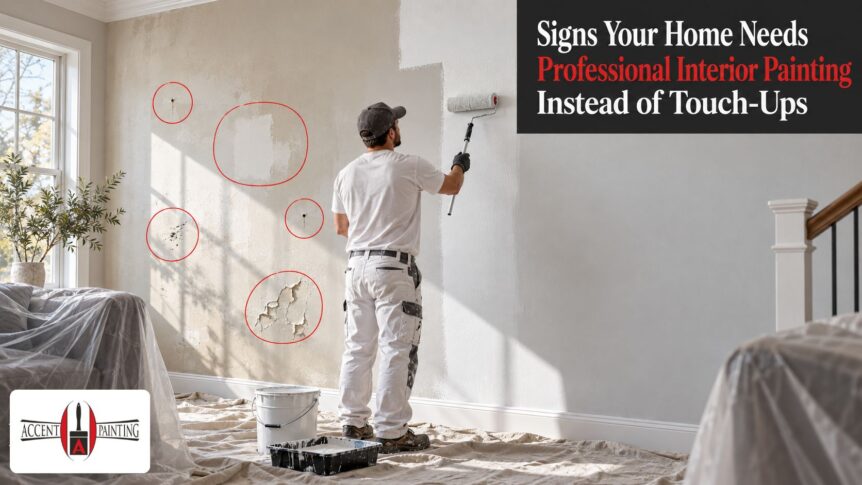
Your home probably needs professional interior painting instead of touch-ups when marks or damage cover a large area, the original color and sheen cannot be matched, paint is peeling, or repaired sections remain visible after drying. Touch-ups work for small, isolated imperfections on a stable, relatively recent coating. They cannot correct widespread wear or a failing paint layer.
The key question is not simply whether you still have the original paint. You also need to consider the wall’s condition, lighting, texture, cleanliness, and how much the existing coating has changed over time.
Should you touch up or repaint the wall?
A touch-up means applying paint only to a small damaged spot. Repainting means coating the entire wall, room, or connected architectural section.
Use this comparison before opening the leftover paint can.
Wall condition | Touch-up may work | Repainting is usually better |
One or two small scuffs | Yes | Not usually |
Small nail holes with matching paint | Yes | Not usually |
Marks covering several parts of the wall | No | Yes |
Paint peeling or bubbling | No | Yes, after correcting the cause |
Large drywall repair | Rarely | Yes |
Heavy staining or discoloration | Rarely | Yes, with proper primer |
Different color or sheen after touch-up | No | Yes |
Widespread fading | No | Yes |
Numerous previous patches | No | Yes |
Unknown original paint | Unlikely | Yes |
A whole-room repaint may not be necessary when only one wall is affected. Repainting the complete wall from corner to corner can provide a consistent result without coating every surface in the room.
In short: Touch up one small, stable defect. Repaint when the damage, mismatch, or coating problem affects how the entire wall looks or performs.
When professional interior painting is the better option
A wall does not need to be falling apart before repainting becomes reasonable. Several smaller problems can create a worn, inconsistent finish that spot painting cannot correct.
1. Touch-up patches remain visible
A freshly applied patch may look different while wet, but it should blend reasonably once fully dry. If the patch remains noticeably lighter, darker, flatter, or shinier, adding more paint to the same spot may make it more obvious.
A visible paint color mismatch can result from:
- Natural fading of the existing wall
- A different paint formula or product line
- Incorrect color matching
- Different sheen
- Paint that was not mixed thoroughly
- Applying with a brush instead of the original roller
- Different wall texture
- Dirt or residue on the surrounding paint
Strong side lighting can make a sheen difference visible even when the color is close. This is common on long hallway walls and rooms with large windows.
2. Scuffs and marks cover several areas
A few isolated marks can often be cleaned or touched up. When fingerprints, furniture marks, scratches, and stains appear across the entire wall, spot repairs tend to create a patchwork finish.
This is common in:
- Hallways
- Stairways
- Children’s rooms
- Kitchens
- Entryways
- Living rooms
- Areas around switches and door frames
Repeated cleaning can also change the sheen. If clean areas look glossier or duller than the surrounding wall, repainting may provide a more consistent appearance.
3. Paint is peeling, cracking, or bubbling
Interior paint peeling is a coating failure, not a cosmetic mark. Applying more paint over loose material will not create a stable repair.
Possible causes include:
- Moisture behind the coating
- Painting over dust or grease
- Poor surface preparation
- Incompatible coatings
- Missing primer
- Paint applied to a damp surface
- Loose drywall compound
- Repeated condensation
The failed material should be removed, and the underlying cause must be addressed before repainting. Covering the problem may temporarily hide it, but the new coating can fail with the old one.
4. The wall has extensive drywall repairs
Small nail holes can often be patched and touched up. Larger holes, seams, dents, torn drywall paper, or multiple repaired areas usually require more preparation.
Drywall repair before painting may involve:
- Removing loose material
- Filling and leveling the damaged area
- Sanding the repair
- Matching the wall texture
- Priming the patch
- Repainting the complete wall
Drywall compound and repaired paper absorb paint differently from an existing painted surface. Without primer, the repaired area may appear dull or uneven.
5. Stains continue showing through
Water stains, smoke residue, grease, ink, and other contaminants may bleed through ordinary wall paint. Applying additional finish coats does not always stop the discoloration.
The source of a water stain should be found and corrected before painting. The surface must then be dry, stable, and prepared with an appropriate stain-blocking primer.
Persistent or recurring moisture should be evaluated rather than covered. If mold or another environmental concern is suspected, that issue may require assessment outside the painting scope.
6. The color has faded unevenly
Interior walls can fade where they receive regular sunlight through windows. Furniture, artwork, and shelving may protect part of the wall, leaving visible color differences when items are moved.
Uneven fading cannot be corrected with a few patches because the surrounding paint has changed. Repainting the complete wall or room creates a consistent color.
7. Previous touch-ups have created a patchwork finish
One touch-up may be hard to notice. Ten patches made at different times with slightly different products, rollers, or application methods usually are not.
Look at the wall from several angles during daylight and under the room’s normal lighting. If you can identify numerous flat, shiny, dark, or light areas, additional patches will not solve the larger consistency problem.
Why touch-up paint does not always match
Having the original color name is helpful, but it does not guarantee an invisible repair.
Paint changes after application
The existing wall may have faded, collected residue, or developed a different sheen through cleaning and normal use. Paint stored in a garage or utility area may also change if it has been exposed to unsuitable conditions or repeatedly opened.
Even paint from the same container may not match if it was not stirred thoroughly before use.
Sheen differences are highly visible.
Paint sheen matching is often more difficult than color matching. Flat paint reflects little light and may accept touch-ups more easily. Eggshell, satin, semi-gloss, and gloss finishes reflect more light, which can make a patch visible.
The application tool also affects texture. A brushed patch placed in the middle of a rolled wall may catch light differently.
Wall texture affects the result.
A repaired area that is smoother or rougher than the surrounding wall will remain visible after painting. Color cannot hide a texture difference.
Matching orange peel, knockdown, or another wall finish requires more than filling the hole. The repaired section must be textured and primed before the finish coat is applied.
In short: Successful touch-ups require the same paint, sheen, texture, application method, and similar wall condition. If one of those factors is different, repainting the wall is usually more predictable.
Problems that must be repaired before repainting
Paint is a finish, not a repair for every wall problem. Applying a fresh coat over an unstable surface only hides the warning signs temporarily.
Inspect the room for:
- Active water staining
- Soft or damaged drywall
- Recurring cracks
- Loose joint tape
- Flaking texture
- Grease or smoke residue
- Failed caulk
- Nail pops
- Surface contamination
- Peeling around bathrooms or laundry areas
Small cosmetic repairs can often be handled during interior wall preparation. Active leaks, repeated movement, substantial wall damage, or suspected environmental hazards may require another qualified trade before painting begins.
When a crack needs more than filler
A small, stable drywall crack may be repairable. A crack that repeatedly returns, becomes wider, or appears alongside sticking doors or other movement should be evaluated before it is covered again.
A painter can correct the finish after the cause is addressed. Paint and joint compound cannot stop continuing structural movement.
Which rooms usually show wear first?
Repainting frequency should be based on condition rather than a fixed number of years. The way the room is used matters more than a generic calendar.
Hallways and stairwells
These areas collect handprints, furniture marks, and abrasions. Long walls also receive side lighting that makes patches and surface defects more visible.
Kitchens
Kitchen walls may collect grease, moisture, food residue, and repeated cleaning marks. Preparation must remove contaminants before new paint is applied.
Bathrooms and laundry rooms
Moisture and condensation can affect coatings, particularly when ventilation is poor. Peeling or bubbling should be investigated before repainting.
Children’s rooms and play areas
Walls may have crayons, stickers, dents, fingerprints, and furniture damage. A washable interior paint may make future maintenance easier, but surface repairs still need to be completed first.
Living rooms and bedrooms
These spaces may experience less physical wear, but sunlight, furniture placement, and previous touch-ups can create uneven color.
Rooms do not need to be repainted together. If one high-traffic hallway is worn while the adjacent bedrooms remain in good condition, painting only the affected area may be the sensible choice.
DIY touch-up or professional repainting?
A homeowner can often manage a small touch-up when the wall is clean, undamaged, and painted with a known product.
DIY may be reasonable when:
- The defect is small
- The original paint is available and usable
- The color and sheen are known
- No moisture or adhesion issue is present
- The wall texture is intact
- Furniture and floors can be protected easily
Consider interior house painters when:
- Several rooms need work
- Walls require drywall or plaster repairs
- Paint is peeling or failing
- High walls or stairwells are involved
- Stains need specialized priming
- Trim, doors, and ceilings are included
- Existing patches remain visible
- You need consistent color and sheen
- Furniture and belongings require extensive protection
Hiring a painter for one tiny scuff is unnecessary. Hiring one becomes more practical when preparation, access, repairs, or finish consistency exceed what a basic touch-up can accomplish.
What happens during professional interior painting?
A well-managed professional interior painting project involves more than applying color.
The process generally includes:
- Reviewing the rooms and confirming the scope
- Identifying repairs and coating problems
- Confirming colors, products, and sheen
- Protecting floors, furniture, and fixtures
- Cleaning and preparing the surfaces
- Completing drywall, plaster, or caulk repairs
- Sanding and priming where needed
- Applying the specified finish coats
- Checking coverage, edges, and repairs
- Completing a final walkthrough
The estimate should state which walls, ceilings, closets, doors, baseboards, crown molding, and other surfaces are included. It should also explain the preparation, products, coats, and exclusions.
Vague language such as “standard preparation” does not tell the homeowner whether stains, cracks, texture matching, or drywall repairs are included.
Frequently asked questions
Touch up a small, isolated mark when the original paint matches and the surface is stable. Repaint the complete wall when damage is widespread, patches remain visible, or the existing coating is failing.
The existing paint may have faded or changed through cleaning. Differences in product, sheen, roller texture, surface preparation, or lighting can also make the repair visible.
No. Loose paint must be removed, and the cause of the failure should be identified. Painting over peeling material will not create a durable repair.
Many painting companies handle minor or moderate drywall and plaster repairs as part of preparation. Confirm the type and extent of repairs included in the written estimate.
The leak or moisture source must be corrected first. Once the surface is dry and stable, an appropriate stain-blocking primer may be needed before finish paint.
Not necessarily. Repainting one complete wall from corner to corner may be enough when the other walls remain in good condition, and the color can be matched.
No fixed schedule applies to every home. Repaint based on wear, damage, fading, cleaning marks, coating failure, and whether touch-ups still blend.
Know when touch-ups are no longer enough.
Small marks do not automatically justify repainting a room. However, widespread wear, visible patches, peeling coatings, stains, and extensive repairs are clear signs that professional interior painting will produce a more consistent result than repeated touch-ups.
Accent Painting of Las Vegas has served Southern Nevada since 1969. Its licensed, insured, and bonded team provides interior painting, drywall and plaster repair, trim painting, cabinet refinishing, and related residential services across Las Vegas, Henderson, and the Las Vegas Valley.
If your walls look worse after every attempted touch-up, contact Accent Painting of Las Vegas to schedule an interior assessment and request a free quote.