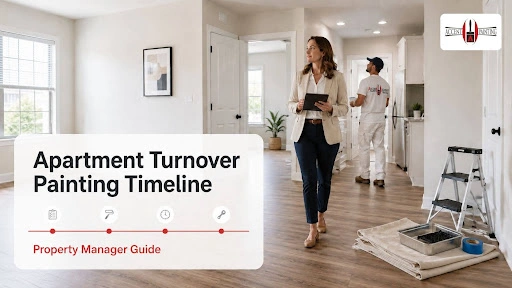
A typical apartment turnover painting timeline is one day for a standard one-bedroom unit and roughly one-and-a-half to two days for many two- or three-bedroom units when the apartment is empty, the scope is approved, and repairs are minor. Units with extensive drywall damage, dark-to-light color changes, stained ceilings, damaged trim, or multiple maintenance issues may require three to five days or longer.
That is only the painting portion. The complete apartment turnover, from key return to final move-in inspection, may take several days because maintenance, flooring, cleaning, appliance checks, rekeying, inspections, and vendor coordination must also be completed. A structured turnover operation generally targets a four- to seven-day window, although delays between contractors can push the schedule well beyond that range.
How long does apartment turnover painting take?
The right planning window depends less on bedroom count than on the actual condition of the unit. A clean two-bedroom apartment needing one wall coat may move faster than a small studio with smoke stains, damaged drywall, and multiple color changes.
Use the following ranges for early scheduling, not as guaranteed completion times.
Unit condition and scope | Typical painting window | Work commonly included |
Light touch-up | Half day to 1 day | Small scuffs, nail holes, limited wall sections |
Standard one-bedroom repaint | About 1 day | Minor patching and repainting walls in the existing color |
Standard two- or three-bedroom repaint | 1.5 to 2 days | Walls, minor repairs, basic trim touch-ups |
Full interior repaint | 2 to 4 days | Walls, ceilings, doors, baseboards, closets and trim |
Heavy restoration | 3 to 5+ days | Extensive drywall repair, stain blocking, major color change or damaged surfaces |
Multi-unit batch | Based on crew capacity | Several units completed in parallel under a standardized scope |
Painting schedules expand when preparation becomes more involved. Holes must be filled, damaged drywall repaired, stains sealed, glossy surfaces scuffed, and patched areas allowed to dry before finish paint is applied.
In short: Most routine vacant-unit repaints require one to two working days. Heavy repairs and expanded scopes should be scheduled separately instead of being forced into a standard turn window.
A practical day-by-day turnover painting schedule
The smoothest turnovers begin before the painter enters the unit. Property management, maintenance, leasing, cleaning, flooring, and painting teams need one approved sequence rather than separate vendor schedules.
Day 0: Move-out inspection and documentation
Inspect the unit as soon as possession is returned. Take dated photographs, record wall and ceiling conditions, and document whether each room needs cleaning, touch-ups, repairs, priming, or complete repainting.
Look specifically for:
- Nail holes and anchor damage
- Loose drywall paper
- Cracks and nail pops
- Water stains
- Bubbling or peeling paint
- Smoke or cooking residue
- Pet-related stains or odors
- Crayon, marker, grease, or adhesive residue
- Damaged doors, cabinets, and baseboards
- Unauthorized colors or wall treatments
Do not automatically paint over bubbling finishes or water staining. Those conditions may point to moisture behind the drywall and should be investigated before cosmetic work begins.
The inspection should produce a defined scope, not a vague instruction such as “make the unit ready.” Identify which surfaces need work, which paint specifications apply, and which repairs belong to maintenance rather than the painting contractor.
Day 1: Repairs and surface preparation
Minor repairs and preparation usually begin first. Depending on the apartment, this may include:
- Filling nail and screw holes
- Repairing damaged drywall
- Sanding patched areas
- Removing loose or peeling paint
- Cleaning grease from kitchen walls
- Caulking small gaps
- Spot-priming repairs and stains
- Protecting flooring, fixtures, and appliances
Preparation is the stage most likely to expose hidden scope. Once wall hangings, adhesive hooks, shelving, or abandoned fixtures are removed, damage may be worse than it appeared during the initial walkthrough.
Property managers should establish a fast approval process for reasonable change orders. A crew waiting half a day for authorization can lose the production window needed to finish before the cleaner or flooring installer arrives.
Day 2: Main paint application
Once repairs are dry and surfaces are ready, the crew can apply the main finish coat. Empty apartments are generally faster to paint because crews do not need to move furniture or work around occupants.
A standard repaint may include walls and limited trim touch-ups. A broader make-ready scope could include:
- Walls
- Ceilings
- Baseboards
- Interior doors
- Door frames
- Closets
- Window trim
- Previously painted shelving
The exact order varies by application method and scope. What matters operationally is that the painter knows which surfaces belong in the work order before arriving.
Day 3: Additional coats, touch-ups and quality control
Some units require an additional coat because of a strong color change, uneven previous coverage, porous repairs, stains, or inconsistent sheen.
After the finish coat has dried enough for inspection, the crew should check:
- Wall coverage under normal room lighting
- Cut lines around ceilings and trim
- Roller marks and missed areas
- Patched surfaces showing through the finish
- Paint on flooring, hardware or fixtures
- Doors and cabinets that were painted shut
- Debris, masking materials and leftover supplies
This is also the right time to record the final paint brand, product, color, sheen and date. That information makes later maintenance and future apartment painting between tenants easier to standardize.
Day 4 and beyond: Heavy repairs or expanded work
A unit may need additional time when the work includes damaged ceilings, extensive drywall replacement, repeated stain blocking, cabinet refinishing, wallpaper removal, multiple accent colors, painted-over hardware, or trim replacement.
The mistake is not that this work takes longer. The mistake is treating a restoration unit like an ordinary repaint and promising the same turnover date.
In short: Inspect and approve the scope on Day 0, complete repairs before painting, leave room for an additional coat, and schedule the final walkthrough before cleaning and leasing photography.
Touch-ups versus a full repaint
Not every vacancy needs a complete rental unit repainting project. A consistent decision standard prevents unnecessary painting while also avoiding patchy walls that make an otherwise clean apartment look neglected.
Choose touch-ups when | Choose a full repaint when |
Damage is limited to a few small areas | Scuffs and patches appear throughout the room |
The original paint is available | The previous color or sheen cannot be matched |
Existing paint has not noticeably faded | Touch-ups create visible flashing |
Walls are generally clean | Walls have widespread stains or residue |
Repairs are small and isolated | Numerous holes or repairs are present |
The unit has a consistent neutral color | Tenants applied dark, bright, or unauthorized colors |
The previous finish remains sound | Paint is peeling, bubbling, or failing |
“Flashing” happens when a touch-up reflects light differently from the surrounding wall. Even when the color is technically correct, differences in sheen, age, application method, or surface texture can leave obvious patches.
Touch-ups are most effective when the property records the exact paint product, color formula, sheen, and application history for every unit. Standardized finishes also reduce the number of nearly identical paint cans maintenance teams must store.
In short: Touch up isolated damage when the paint can be matched. Repaint the complete wall or room when patches will remain obvious, or wear is widespread.
What delays an apartment turnover painting project?
Most delays are predictable. They happen when the apartment is not ready for the crew, the scope is incomplete, or vendors have been scheduled in the wrong order.
An incomplete move-out inspection
A painter may arrive expecting minor touch-ups and discover damaged drywall, abandoned shelving, heavy stains, or unauthorized wall colors.
Provide photographs and a written scope before confirming the completion date.
Repairs that have not been completed
Plumbing leaks, electrical access work, window replacement, HVAC repairs, and drywall replacement can damage new paint. Complete invasive repairs before finishing painting whenever possible.
Moisture or unresolved leaks
Painting over a damp surface hides the symptom but does not solve the problem. Water stains, soft drywall, bubbling paint, and musty odors need investigation before primer or finish paint is applied.
Slow scope approval
Crews lose production time when every additional patch, ceiling stain or damaged door requires several phone calls. Give the onsite manager a reasonable approval threshold or create preapproved pricing for common repairs.
Unavailable colors or unclear specifications
Each work order should list the approved paint brand, product, color, sheen and surfaces. “Use the normal apartment beige” is not a reliable paint specification.
Too many trades working at once
Painters, cleaners, flooring installers, maintenance technicians, and appliance vendors cannot all work efficiently in the same rooms simultaneously.
Overscheduling the painting crew
A schedule based only on bedroom count ignores unit condition. Batch similar scopes together and leave capacity for heavy turns.
Adding work after production begins
Cabinets, ceilings, closets, and doors can significantly increase the schedule. Decide whether these surfaces are included before the crew mobilizes.
When should painting happen during an apartment turnover?
Painting usually belongs after repairs that could damage walls and before the final cleaning. A practical sequence is:
- Recover keys and secure the unit.
- Document the move-out condition.
- Remove abandoned belongings.
- Diagnose leaks, moisture, and safety concerns.
- Complete plumbing, electrical, and invasive maintenance.
- Repair drywall and damaged surfaces.
- Complete vacant apartment painting.
- Install or finish flooring as appropriate for the project.
- Complete the final detailed cleaning.
- Perform appliance and safety checks.
- Create the punch list.
- Complete the final manager walkthrough.
- Release the unit to leasing.
Some flooring and painting tasks may be reversed depending on whether flooring is being cleaned, refinished, or replaced. The vendors should agree on protection requirements before work starts.
Cleaning should generally happen after dust-producing repairs and painting. A turnover checklist that places cleaning first often creates duplicate work when painters sand patches, remove masking or track materials through the unit. Structured turnover guidance similarly places paint, flooring and repairs before the final cleaning and walkthrough.
In short: Finish disruptive repairs first, paint before the final clean, and complete one quality-control walkthrough before releasing the apartment to leasing.
How property managers can shorten painting delays
Speed does not come from telling painters to work faster. It comes from removing waiting time, uncertainty, and repeated decisions.
Inspect before the official vacancy date when permitted
A pre-move-out inspection can identify unauthorized colors, major drywall damage and likely repair needs. The final scope should still be confirmed after possession is returned.
Use standard paint specifications.
Maintain a written schedule listing the standard wall, ceiling, trim, door and cabinet finishes used across the property.
Record:
- Manufacturer
- Product line
- Color name and formula
- Sheen
- Approved substitutions
- Date each unit was last painted
Create three standard scopes
A simple classification system makes scheduling more accurate:
- Level 1: Touch-ups and minor patches
- Level 2: Standard wall repaint
- Level 3: Heavy repairs or complete interior repaint
Do not assign a completion date until the unit has been classified.
Provide access before the crew arrives.
Confirm that keys, gate codes, lockbox instructions, parking details, water, electricity, and working HVAC are available.
Preapprove common repair items
Set unit pricing or approval limits for nail holes, drywall patches, stain-blocking primer, door painting and baseboard repairs.
Batch similar apartments
When several units are vacant, group them by building, floor plan, color and scope. This reduces setup time and makes labor allocation more predictable.
Track the handoff between vendors.
A four-day repair and painting schedule can become a ten-day turnover when the apartment sits untouched between trades. Turnover research shows that idle gaps and inconsistent vendor coordination are major reasons complete turnovers exceed the intended four- to seven-day window.
In short: Standardize the scope, specifications, approvals, and vendor handoffs. Cutting idle days usually matters more than cutting a few minutes from the painting process.
What should property managers ask a painting contractor?
Before hiring a multifamily painting contractor, ask questions that reveal whether the company can operate within a turnover system rather than simply paint one apartment.
- How many vacant units can your crew complete simultaneously?
- How do you define a touch-up, standard repaint, and heavy turn?
- Are minor drywall repairs handled by your crew?
- How quickly can you provide a revised scope after inspection?
- Who can approve additional work onsite?
- Do you maintain unit-specific paint records?
- Can you work with standardized colors and products?
- What surfaces are excluded from the standard repaint?
- How do you communicate daily production status?
- What happens if maintenance delays the start?
- How is the final quality walkthrough handled?
- Can you provide a recurring schedule for expected move-outs?
Do not select a contractor solely because they promise the shortest timeline. A one-day promise means little when the scope excludes preparation, ceilings, doors, drywall repairs, cleanup, or a second coat.
Frequently asked questions
Build a more predictable apartment turnover painting timeline
A reliable apartment turnover painting timeline begins with a documented inspection, a clearly approved scope, and the correct sequence of vendors. Most standard vacant apartments can be painted in one to two working days, but repairs, expanded surfaces and slow approvals can quickly extend that window.
Accent Painting of Las Vegas provides commercial and multifamily painting services for apartments, HOAs and other properties across Las Vegas, Henderson and surrounding Southern Nevada communities. The family-owned, third-generation company was established in 1969 and lists planning, professional execution and a final quality walkthrough as parts of its service process.
For an upcoming unit turn, seasonal vacancy schedule,e or multi-property painting program, contact Accent Painting of Las Vegas to request a free estimate and establish a practical painting schedule before the next move-out date.