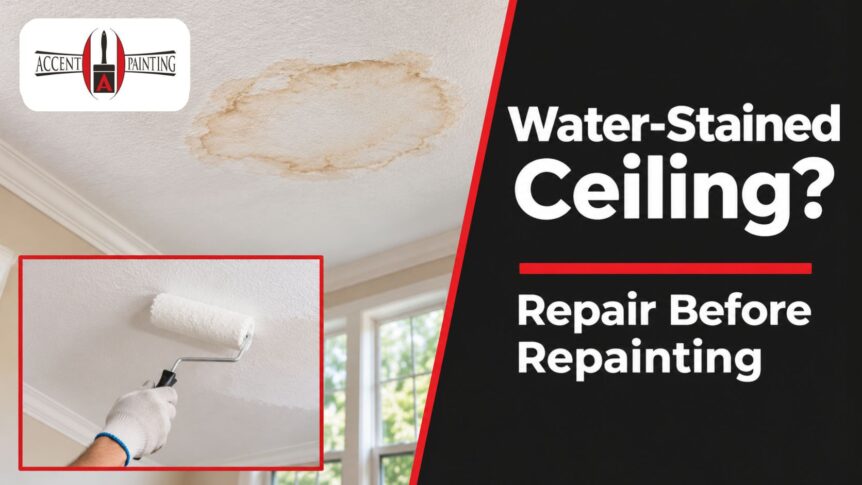
Water-stained ceiling repair begins with finding and fixing the source of moisture. Once the leak has been resolved and the ceiling is completely dry, the damaged surface can be assessed, repaired if necessary, sealed with a suitable stain-blocking primer, and repainted. Simply rolling fresh ceiling paint over a brown water mark usually isn’t enough to keep the discoloration from returning.
A yellow or brown ceiling stain might be the only visible reminder of an old leak, or it could indicate water damage that is still developing above the drywall.
For homeowners in Las Vegas and Henderson, ceiling stains can result from roof leaks during storms, plumbing problems in upstairs bathrooms, or condensation around air-conditioning equipment.
The right repair depends on whether the ceiling is still structurally sound.
What Causes Water Stains on Ceilings?
Water stains form when moisture reaches the ceiling material and leaves behind discoloration.
The stain may appear as a small yellow patch, a brown ring, or an irregular mark that grows over time.
Common causes include:
Roof Leaks
A damaged roof, failed flashing, or an opening around a roof penetration can allow rainwater to enter the ceiling assembly.
In Las Vegas, roof problems may become noticeable after periods of heavy rain. A ceiling stain can appear some distance from the original leak because water may travel along framing or other building materials before reaching the drywall.
Plumbing Leaks
Bathrooms, kitchens, and laundry areas located above a ceiling can create water stains when plumbing connections, drain lines, or fixtures leak.
A stain beneath an upstairs bathroom may become darker after showering or using certain fixtures.
Plumbing leaks should be repaired before any ceiling finishing work begins.
Air-Conditioning Condensation
Air-conditioning systems produce condensation during normal operation.
If a condensate drain becomes blocked, an overflow pan leaks, or another part of the drainage system fails, moisture can affect nearby ceilings.
This is worth investigating in Las Vegas homes where cooling systems operate heavily during the warmer months.
Previously Repaired Water Damage
Not every ceiling stain means water is actively entering the property.
Sometimes the leak was repaired months earlier, but the discoloration remains because the affected ceiling was never properly sealed and repainted.
The challenge is confirming that the stain is old rather than assuming the area is dry.
Can You Paint Over a Water-Stained Ceiling?
Yes, but only when the source of moisture has been addressed, and the ceiling material is dry and sound.
Ordinary ceiling paint may temporarily cover a stain, but water-soluble residues can migrate through a new coating and become visible again.
A suitable stain-blocking primer creates a barrier between the old discoloration and the finish paint.
However, primer cannot restore damaged drywall or stop an active leak.
Before deciding to repaint, inspect the ceiling for softness, sagging, cracks, loose texture, peeling paint, and signs of ongoing moisture.
Does a Water-Stained Ceiling Need Repair or Replacement?
The extent of the water damage determines whether the existing ceiling material can remain in place.
Ceiling condition | Likely next step |
Dry, firm ceiling with an old brown stain | Clean, stain-block prime, and repaint |
Small area of peeling paint with sound drywall | Remove loose paint, repair the finish, prime, and repaint |
Damaged joint compound or minor surface defects | Repair the surface and restore texture before painting |
Swollen, soft, crumbling, or sagging drywall | Professional assessment and possible drywall replacement |
Recurring dampness or expanding stain | Identify and repair the moisture source first |
Visible mold or a persistent musty odor | Address the moisture issue and obtain appropriate remediation guidance |
A ceiling that is visibly bulging or sagging may present a safety hazard. Keep people away from the affected area and arrange a qualified inspection rather than attempting to scrape or paint it.
If water has reached a light fixture or electrical installation, avoid touching wet electrical components and have the situation assessed by a qualified electrician.
How to Repair Water-Stained Ceilings Before Painting
Step 1: Find and Fix the Water Source
Start by determining where the water came from.
If the stain is located near an upstairs bathroom, check for plumbing problems. If it appeared after rainfall, the roof or surrounding building envelope may need inspection.
For stains near attic-mounted HVAC equipment, check whether condensation drainage is functioning properly.
A plumber, roofing contractor, or HVAC technician may be needed to fix the underlying problem.
Do not begin cosmetic repairs while the leak remains active.
Step 2: Allow the Ceiling to Dry Completely
Drying is essential before priming or repainting.
Water trapped inside drywall or insulation can lead to further material damage and moisture-related problems.
The U.S. Environmental Protection Agency recommends drying water-damaged areas and materials promptly, generally within 24–48 hours where possible, to help prevent mold growth.
That does not mean every water-damaged ceiling is automatically ready to paint after 48 hours. Some assemblies require more extensive drying, inspection, or material replacement.
A moisture assessment can help determine whether the affected drywall is ready for repair.
Step 3: Check Whether the Drywall Is Still Sound
Once the moisture issue is resolved, inspect the ceiling material.
Drywall that remains firm, flat, and intact may only require cosmetic repairs.
If the board has swollen, lost its strength, separated at the seams, or begun sagging, replacement may be more appropriate.
Damaged insulation above the ceiling may also need attention.
A fresh coat of paint cannot restore weakened drywall.
For more extensive damage, professional ceiling drywall repair in Las Vegas can address the affected material before refinishing begins.
Step 4: Remove Loose Paint and Repair the Surface
If the drywall is sound but the old paint has peeled or blistered, carefully remove unstable coating.
Repair small imperfections using a patching compound suitable for the ceiling material.
After the repair has dried, smooth the area and remove sanding dust.
If the ceiling has an orange-peel, knockdown, or other textured finish, the repaired area may need texture matching.
This step is particularly important because a smooth patch surrounded by a textured ceiling can remain visible even after the stain has been covered.
Step 5: Apply a Suitable Stain-Blocking Primer
A stain-blocking primer is one of the most important parts of water-stained ceiling repair.
Standard ceiling paint is not always designed to seal the residues left behind by water damage.
Some shellac-based and oil-based primers are formulated to block stubborn water stains. Certain water-based products can also work when specifically rated for this use.
The appropriate primer depends on the surface condition, severity of the stain, existing coating, and product compatibility.
Apply the primer according to the manufacturer’s directions. If the stain remains visible after the recommended application and drying process, additional preparation or another appropriate coat may be necessary.
Maintain suitable ventilation and follow the product’s safety instructions, particularly when using solvent-based primers.
Step 6: Repaint the Ceiling for a Consistent Finish
Once the primer has dried as directed, apply a compatible ceiling paint.
Flat or low-sheen finishes are commonly chosen for residential ceilings because they can make minor surface imperfections less noticeable.
When only a small area has been repaired, matching the original color and sheen can be difficult.
Even white ceiling paint may look different from the surrounding finish because of aging, lighting, and previous paint formulations.
Repainting the entire ceiling plane often creates a more consistent appearance than attempting to blend a small patch.
Why Do Water Stains Reappear After Repainting?
A recurring ceiling stain usually means something important was missed during the repair.
Possible reasons include an unresolved leak, residual moisture, an unsuitable primer, or incomplete preparation.
For example, applying standard latex ceiling paint directly over a yellow-brown stain may initially conceal it. As the new paint dries, the discoloration may become visible again.
If the stain reappears or expands after proper stain-blocking treatment, the moisture source should be investigated again.
Repeatedly adding more finish paint is unlikely to solve an active water problem.
What About Ceiling Texture After Water Damage?
Many residential ceilings have a textured finish rather than a perfectly smooth surface.
When water damage affects the drywall, simply filling a hole and painting over it may leave a noticeable patch.
Texture matching requires recreating the surrounding pattern, allowing the repair to dry, and applying a compatible primer and finish.
The difficulty varies depending on the original texture, the age of the coating, and the size of the repaired area.
You can learn more about how professional painters match drywall texture after repairs before planning the ceiling repaint.
When Should You Hire a Professional for Ceiling Water Damage?
A small, dry stain on otherwise sound drywall may be manageable as a basic painting project.
Professional assistance is advisable when:
- The ceiling has become soft, swollen, or uneven.
- Water damage extends beyond the visible stain.
- The affected ceiling has difficult-to-match texture.
- Previous stain-blocking and repainting attempts have failed.
- A larger section of drywall requires replacement.
- The leak source is uncertain or mold is suspected.
A painting contractor can address appropriate drywall finishing and repainting work, while other specialists may be needed for the leak, electrical hazards, or mold remediation.
Separating these responsibilities helps ensure the underlying problem is resolved before the finished ceiling is restored.
Frequently asked questions
Use a primer specifically formulated to block water stains. Shellac-based and oil-based stain blockers are common options, while some specialty water-based products may also be suitable. Always check compatibility with the ceiling material and finish paint.
Yes, when the drywall is dry, firm, and structurally sound. Minor staining and surface defects may be repaired before priming and repainting. Swollen, crumbling, or sagging drywall may require replacement.
The drying period varies with the amount of water, affected materials, ventilation, and surrounding conditions. Do not rely on a fixed number of days; confirm the ceiling is adequately dry before refinishing.
Water stains may contain residues that bleed through ordinary paint. A suitable stain-blocking primer is generally needed after the source of moisture has been repaired and the ceiling has dried.
No. Plumbing problems, HVAC condensation, and previous water damage can also cause ceiling stains. The location, timing, and surrounding conditions can help identify the likely source.
Restore Your Ceiling With Professional Drywall Repair and Painting
Water-stained ceilings need more than a quick cosmetic cover-up when moisture has damaged the underlying material.
Finding the source, confirming the ceiling is dry, repairing damaged drywall, matching the texture, and applying an appropriate primer can help prevent recurring finish problems.
Accent Painting of Las Vegas offers interior painting and drywall repair services for homeowners and property managers throughout Las Vegas, Henderson, and surrounding Southern Nevada communities.
If the leak has been resolved and your ceiling is ready for restoration, request a Free Painting Estimate to discuss ceiling drywall repairs, surface preparation, and professional repainting.